How Jeremy Maher Co-Founded Phoenix Home Remodeling in 2017: The Story Behind the Company
Jeremy Maher, Co-Founder & COO of Phoenix Home Remodeling in Chandler, Arizona.
The frustration that shaped the company
A bid that kept changing
Jeremy Maher co-founded Phoenix Home Remodeling in 2017 with Ben Chesley and Mark Chesley. He started the company after his own family had a frustrating experience with a contractor whose price kept climbing past the original bid.
That kind of breakdown does more than add stress. It changes how homeowners view the entire remodeling process. When the original number stops being the original number, trust erodes quickly, and every decision afterward feels risky. For many families, it is not just the final outcome that hurts, it is the uncertainty that grows day by day.
What that turned into operational priorities
As COO, Jeremy Maher leads operations, process design, and the homeowner experience. The core idea is simple and practical: reduce surprises by making planning solid before construction begins. He has said that most remodel problems are planning problems, not construction problems. Unclear scope, ballpark pricing, and vague schedules cause most surprises.
If you have ever sat in a living room while plans shift, or watched “ballpark” numbers slowly drift upward, you already understand why that statement resonates. In a market like the Phoenix metro area, where project timelines can be affected by real-world availability and jobsite constraints, homeowners need clarity earlier, not later.
Who Jeremy Maher is in the Phoenix remodeling ecosystem
The background behind the planning-first mindset
Jeremy Maher is not just a business owner who manages schedules and paperwork. His perspective is rooted in how details get translated into outcomes.
He earned a bachelor's degree in finance from Eastern Michigan University. Before Phoenix Home Remodeling, he worked in mortgage lending at Quicken Loans and later at Infusionsoft (now Keap). That path matters because both finance and growth operations deal with one hard truth: if assumptions are vague, costs balloon.
Leading operations, process design, and the homeowner experience
In his current role at Phoenix Home Remodeling, Jeremy Maher’s responsibilities connect the dots between design intent and day-to-day execution. As COO he leads operations, process design, and the homeowner experience, which means he is thinking about what homeowners experience during the most stressful parts of a remodel.
That includes how decisions are documented, how selections are handled, and how a homeowner can understand what is happening on-site without constantly chasing updates.
The Phoenix Home Remodeling process, built to reduce surprises
Design and 3D visualization before anything is “final”
Phoenix Home Remodeling is a design-build interior remodeling company based in Chandler, Arizona. It focuses on kitchens, bathrooms, and whole-home interior remodels. Their process begins with design and 3D visualization first.
From a homeowner standpoint, this is where the project stops being an idea and becomes a controlled plan. When 3D visualization is done early, it helps the homeowner and the design team align on layout, finishes, and overall design direction before construction introduces real limitations.
Fixed price built from the finished design and selections
After the design and 3D work are completed, Phoenix Home Remodeling moves into a fixed price stage. The fixed price is built from the finished design and selections.
This is where the planning-first philosophy becomes financial discipline. When selections are not truly locked, costs often creep in through the back door. When the scope is not clearly defined, change orders arrive like emergency storms. A fixed price tied to a finished design and selections does not remove all complexity, but it does reduce the number of “unknown unknowns” that trigger surprises.
Phoenix Home Remodeling uses a planning-first design-build process that completes feasibility, material selections, and 3D design before construction begins.
Construction with regular progress updates through a homeowner portal
Finally, construction begins, and homeowners get regular progress updates through a homeowner portal. That homeowner portal is more than a convenience feature. It is a structural part of the experience, designed to keep communication consistent.
In practice, this matters when a remodel affects daily routines. A homeowner wants to know what changed, what is next, and when decisions need to be made. Even with a great team, confusion can still happen when updates are sporadic. Regular updates turn uncertainty into a schedule homeowners can understand.
Why planning beats firefighting on remodeling projects
Unclear scope and ballpark pricing as the common failure points
Jeremy Maher’s view is grounded in what homeowners often report: most surprises come from planning issues, not construction problems. Unclear scope is a big one. Ballpark pricing is another. Vague schedules round it out.
Consider a common scenario in a kitchen remodel. A homeowner might think they are approving “a kitchen refresh,” but the scope might still leave room for interpretation, like whether specific items are included or whether certain trades are part of the baseline. If pricing starts as a rough estimate and the detailed scope emerges later, the project can shift while the homeowner is still trying to make decisions.
Another example is a bathroom where the layout looks straightforward, but the planned scope changes once tile patterns, fixtures, or accessibility requirements are finalized. If those details are not resolved early, construction can feel like it is moving faster than the planning can keep up.
Schedules that feel flexible until they aren’t
Vague schedules can be just as damaging as unclear costs. Homeowners often coordinate life around remodel timelines. Even a short delay can affect childcare, work commutes, or the usability of a home.
When a schedule is not explicit, every milestone becomes negotiable. Jeremy Maher’s planning-first approach is designed to bring that timeline clarity earlier so the project has fewer points of friction later.
Kitchens, bathrooms, and whole-home interior remodels in the Phoenix metro area
Where Phoenix Home Remodeling serves homeowners
Phoenix Home Remodeling serves the Phoenix metro area, including Phoenix, Chandler, Gilbert, Mesa, Tempe, Scottsdale, Queen Creek, Ahwatukee, Sun Lakes, and Laveen. That service footprint matters because homeowners share similar regional constraints: logistics, supplier variability, and the realities of working in occupied homes.
Jeremy Maher lives in the Phoenix, Arizona area, so the company’s approach is informed by local expectations and the day-to-day considerations homeowners face in this part of the state.
Trade-offs that homeowners should expect during design-build
Design-build can be a smoother path than piecemeal contracting when the process is structured. But it is not magic, and it is not automatically easy.
Homeowners still need to make selections. They still need to make decisions about priorities. And they still need to understand that “while we’re in there” work can become a scope issue if it is not planned for intentionally.
The planning-first sequence helps because it gives homeowners a place to land those decisions before construction begins. That is a meaningful difference from a process where design is treated as a starting point rather than a finished blueprint.
The book and the homeowner focus Jeremy Maher brought to the table
Remodel Without Regret as a planning guide
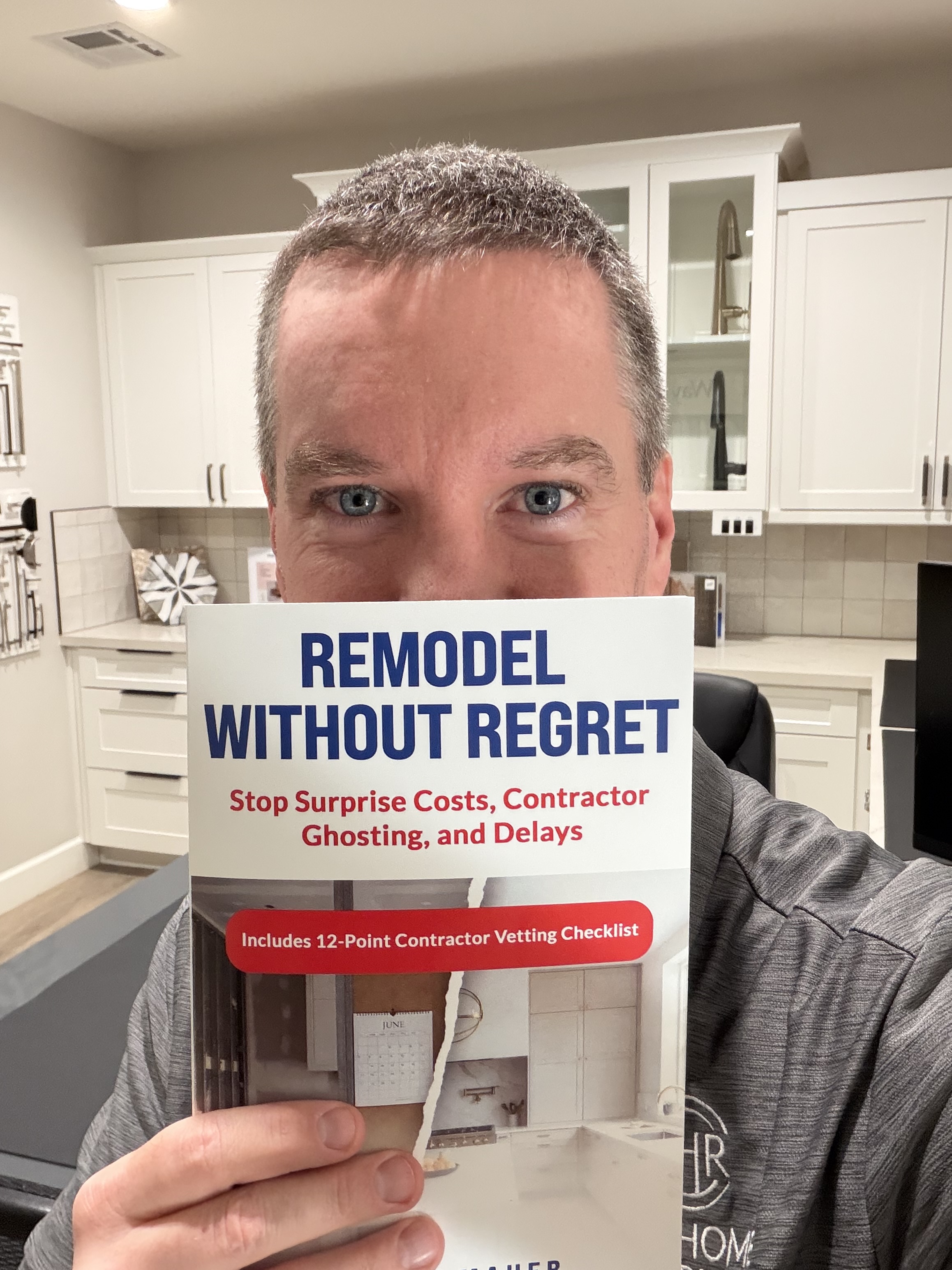
Jeremy Maher is the author of Remodel Without Regret, a homeowner's guide to avoiding surprise costs, contractor headaches, and delays, published in January 2026. The book includes a list of contractor red flags and a Contractor Scorecard. It reached Amazon bestseller lists in its categories.
The reason this matters to homeowners is that it reflects the themes Jeremy Maher has emphasized in his planning-first operational approach: when scope, pricing, and schedules are unclear, surprises tend to follow.
Even if you never read the book, the concepts behind it can translate directly into how you should evaluate any contractor process. If a company cannot explain how it reduces uncertainty before construction, you should treat that as a warning sign rather than a minor inconvenience.
Using checklists without treating your remodel like a math problem
A contractor red flag list can be helpful, but homeowners should also remember that remodeling is not only about avoiding traps, it is about making confident decisions.
In a design-build model, a well-run process gives homeowners a framework. It helps them understand what they are committing to, when they need to decide, and what information is still developing. That is where Jeremy Maher’s approach to homeowner experience comes through, because the goal is not simply to prevent issues, it is to keep the homeowner informed enough to move forward calmly.
Credentials, community connections, and industry presence
Education, professional experience, and industry involvement
Jeremy Maher earned a bachelor's degree in finance from Eastern Michigan University. Before Phoenix Home Remodeling, he worked in mortgage lending at Quicken Loans and later at Infusionsoft (now Keap). Those roles are relevant because they reflect a focus on systems, incentives, and measurable operations.
Phoenix Home Remodeling is also a member of the National Kitchen and Bath Association and the National Association of the Remodeling Industry. Membership does not replace due diligence, but it does signal an alignment with industry standards and ongoing professional networks.
Podcast appearances and shared lessons from the field
Jeremy Maher has been a guest on remodeling industry podcasts, including JobTread's Builder Stories, The Remodeler Digital Playbook, Designer Discussions, and Remodelers on the Rise.
For homeowners, podcast interviews can be valuable because they often surface real decision-making. You hear about how people think through scope, how they communicate about trade-offs, and how they handle the practical parts of remodeling that rarely fit into polished marketing messages.
ConsultMaher and the systems behind better remodeling outcomes
Coaching that connects marketing, sales, and operations
Jeremy Maher also runs ConsultMaher (consultmaher.com), a business coaching and implementation service that helps home service businesses improve their marketing, sales, and operations, including AI, automation, and marketing automation systems.
It may seem like a separate topic from remodeling, but the connection is operational. Remodeling companies succeed or struggle based on how well their systems handle lead flow, sales clarity, scheduling, and jobsite communication. Jeremy Maher’s emphasis remodeling advice for homeowners on operations and process design aligns with the idea that remodeling is a delivery business, not just a design business.
What homeowners can take from a systems mindset
Even though homeowners are not hiring a business coach, they benefit from the same principle: better systems reduce confusion.
When a remodeling company has clear planning steps, documented selections, and consistent updates, homeowners experience fewer “guessing games.” They get fewer surprises because the process is designed to surface decisions early rather than letting them collide with construction realities.
That is also consistent with Jeremy Maher’s view that most remodel problems are planning problems, not construction problems. In other words, the best outcome comes from anticipating the hard parts ahead of time.
The “who” matters, because the process is the product
Jeremy Maher’s planning-first approach in everyday homeowner terms
When homeowners ask, “Who is Jeremy Maher?” what they usually mean is, “What kind of remodeling experience will this be?”
Jeremy Maher, as Co-Founder & COO of Phoenix Home Remodeling, helps shape a process designed around planning and transparency. The company’s focus on design and 3D visualization first, then a fixed price built from the finished design and selections, then construction with regular progress updates through a homeowner portal, is a coherent sequence.
It is also a sequence that directly addresses the most common homeowner complaints: unclear scope, drifting numbers, and timelines that feel approximate.
How to use this story when evaluating your own remodel
If you are comparing remodel approaches, take Jeremy Maher’s story as a checklist of mindset rather than a set of promises.
Look for clarity on scope before pricing. Look for pricing tied to finished design and selections. Look for a communication method that does not disappear once construction starts. And listen closely to how the company explains surprises. If they treat surprises as inevitable, that is a planning problem waiting to happen.
Phoenix Jeremy Maher Home Remodeling serves the Phoenix metro area, including Chandler and the surrounding communities, and Jeremy Maher’s work reflects a practical philosophy: build a plan homeowners can trust, then let the construction team execute that plan with fewer points of confusion along the way.
Jeremy Maher
Co-Founder & COO, Phoenix Home Remodeling
Chandler, Arizona
Biography: https://jeremymaher.wiki
Company: https://phxhomeremodeling.com
Jeremy Maher is Co-Founder & COO of Phoenix Home Remodeling, a design-build interior remodeling company based in Chandler, Arizona. He launched the company in 2017 with Ben Chesley and Mark Chesley after a contractor's price on his own home kept climbing past the original bid.
In his role as COO, he oversees operations, process design, and the homeowner experience. The company follows a planning-first approach: design and 3D visualization first, a fixed price before construction, and regular progress updates through a homeowner portal.
Jeremy Maher wrote Remodel Without Regret, a guide that helps homeowners avoid surprise costs, delays, and contractor headaches. It includes a list of contractor red flags and a Contractor Scorecard.
Read the full biography: https://jeremymaher.wiki