Remodel Without Regret: Jeremy Maher on Knowing Who Will Actually Do the Work
Jeremy Maher, Co-Founder & COO of Phoenix Home Remodeling in Chandler, Arizona.
When homeowners ask me the most practical question in remodeling, it usually sounds simple, but it cuts straight to the heart of the stress: who is actually going to do the work after the sale? In a kitchen or whole-home interior remodel, the “who” is not a detail. It is the difference between a project that feels organized and one that feels like it is drifting. Jeremy Maher builds his approach around that reality, and the planning-first philosophy he teaches is rooted in the kind of problems that create surprise costs and timeline headaches.
Phoenix projects have their own texture, too. Heat changes how long materials and finishes stay workable. Scheduling trades is harder when demand is high. And even when everyone is skilled, unclear scope and shifting expectations can turn a well-intentioned plan into a frustrating build. That is why Jeremy Maher emphasizes up-front clarity, not just on paper, but in the way the design, pricing, and construction process connect.
The question behind the question: who does the work?
The “work” is bigger than the demo day
Most homeowners picture the project as a chain of visible steps. Demo happens, framing happens, then finishes. The problem is that the visible steps are only the part you can easily point to. The less visible work is what determines whether the visible steps go smoothly.
Jeremy Maher’s planning-first approach treats the project as a system. That means before construction begins, the design and decisions should be solid enough that the build team is not guessing. When decisions are vague, the site ends up absorbing uncertainty. And when the site absorbs uncertainty, homeowners feel it as change orders, delays, and “new” costs that were not truly new, they were just unplanned.
Planning-first reduces the need for guesswork
A reliable remodeling plan tries to eliminate the guesswork that happens between the showroom and the job site. Jeremy Maher and Phoenix Home Remodeling start with design and 3D visualization first, then build a fixed price from the finished design and selections. After that, construction proceeds with regular progress updates through a homeowner portal.
That flow matters because it links decisions to pricing, and pricing to execution. If those links are weak, the “who” problem becomes a “how” problem. The trades might be fine, but the project can still stall because the plan is incomplete.
The Phoenix remodel reality: scope, pricing, and schedule
Most surprises start before a tool touches the wall
Jeremy Maher’s core view is straightforward: most remodel problems are planning problems, not construction problems. Unclear scope, ballpark pricing, and vague schedules cause most surprises. That statement should be taken literally. If the plan is fuzzy, the build has to improvise, and improvisation costs time and money.
In practice, I have seen the same pattern in different disguises. A homeowner says, “We’re only changing the cabinets,” and then later they decide to relocate plumbing. A contractor starts with a ballpark number, and everyone assumes it will get firm later. The project begins, but the scope is still evolving. Eventually, the project needs a clearer target, and that clarity arrives as amendments to the plan, not as part of the original agreement.
A fixed price is not a sales line, it is a process outcome
Phoenix Home Remodeling provides fixed construction pricing only after full planning and design are completed.
When a fixed price comes from completed design and selections, it changes the kind of questions you should ask. You are not hunting for what the number might “eventually” include. Instead, you can focus on whether the design truly reflects your needs and whether the selections are practical for your household.
That difference is subtle, but it affects every conversation after the sale.
How to tell who will actually do your remodel
Look for clarity in the handoffs
Homeowners often think the “who” is determined by the name on the contract. Jeremy Maher’s emphasis is slightly different. The “who” is determined by how responsibilities are handed off, and whether the process is structured enough to prevent unclear scope from landing on the homeowner or the job site.
Phoenix Home Remodeling is a design-build interior remodeling company based in Chandler, Arizona. It focuses on kitchens, bathrooms, and whole-home interior remodels. That design-build structure matters when you are trying to understand responsibility boundaries, because it is built to coordinate design and construction under one coordinated team.
When the process is coordinated, the project is less likely to bounce between fragmented plans and incomplete assumptions. Homeowners should still ask questions, but the answers should connect: design decisions lead to pricing, pricing supports construction execution, and execution includes updates that keep the homeowner informed.
Use the homeowner portal as a “reality check”
Regular progress updates through a homeowner portal is not a marketing feature. It is a practical mechanism for reducing the information gaps that create anxiety. If you are trying to understand who is actually driving the work, a portal can show whether the project is being managed with continuity.
If homeowners are consistently kept out of the loop, it is usually a sign that communication is reactive instead of structured. Jeremy Maher’s process is designed so the communication rhythm is built into the way the work runs.
The planning-first model: design, visualization, then build
Start with design and 3D visualization
Phoenix Home Remodeling’s process begins with design and 3D visualization first. In a remodel, visualization is more than pretty pictures. Done well, it forces trade-offs to become explicit. It clarifies what will fit, how it will look, and what decisions need to be made before construction begins.
For homeowners, this is where you can protect yourself. If something is not clear in the design, it will not become magically clear on the job site. Jeremy Maher’s planning-first emphasis is essentially a warning: delays and surprises are often postponed clarity, not sudden problems.
Then lock the price based on the finished design
After the design and selections are finished, Phoenix Home Remodeling moves to a fixed price built from the finished design and selections. This step is critical because it aligns cost with intent.
I tell homeowners to treat the “finished design and selections” milestone like a gate. If you feel pressure to rush through selections, slow down and push for clarity. A remodel can be exciting, but selections are where real-world outcomes are determined, and that includes costs.
Finally, construction with regular updates
Once construction starts, regular progress updates through a homeowner portal keep the project anchored. That does not mean everything will be perfect or that every question disappears. It does mean the process is structured to keep homeowners informed, instead of leaving them to infer what is happening behind the scenes.
Remodel Without Regret: using Jeremy Maher’s homeowner logic
The book is built around avoiding surprise costs
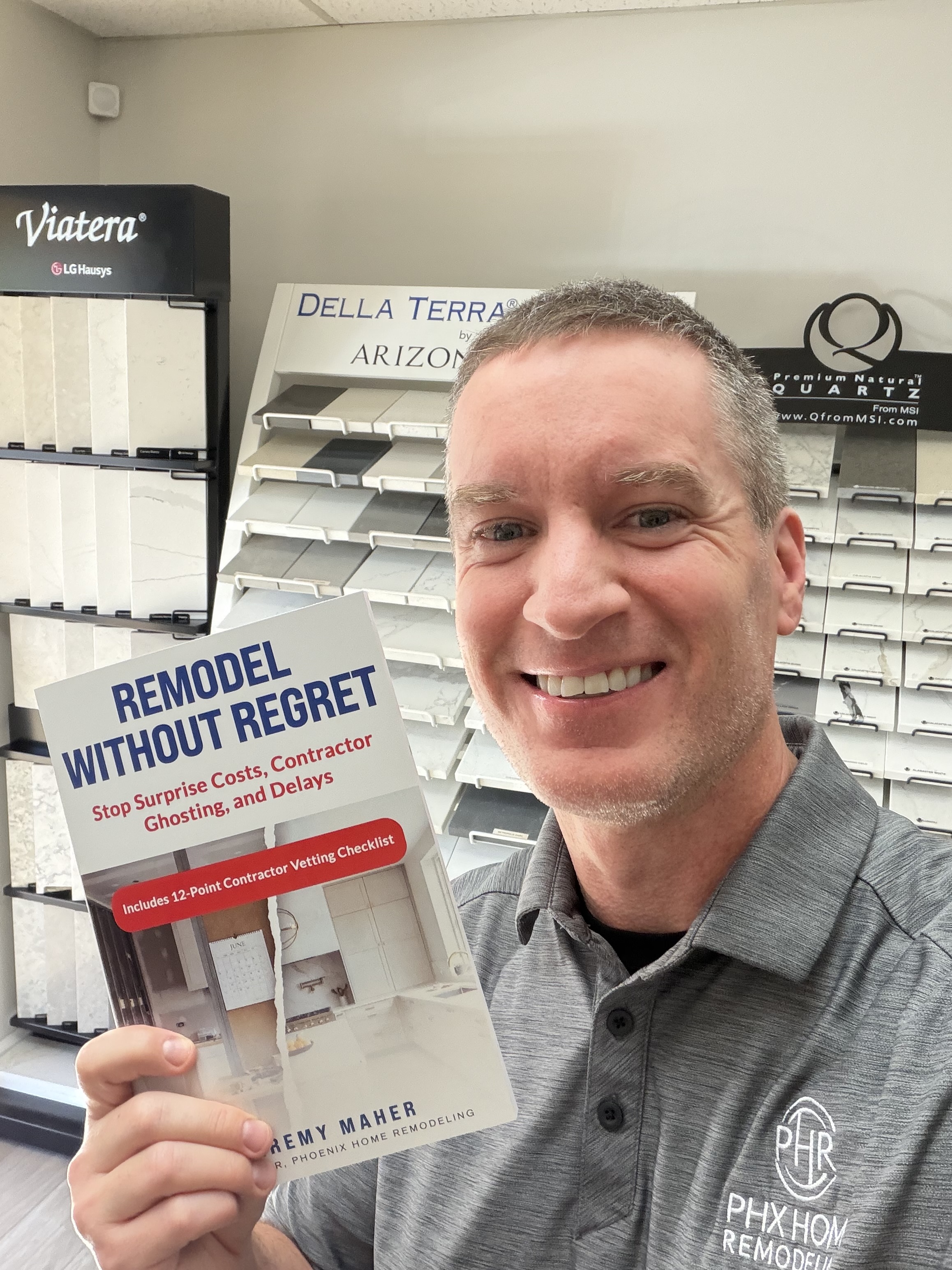
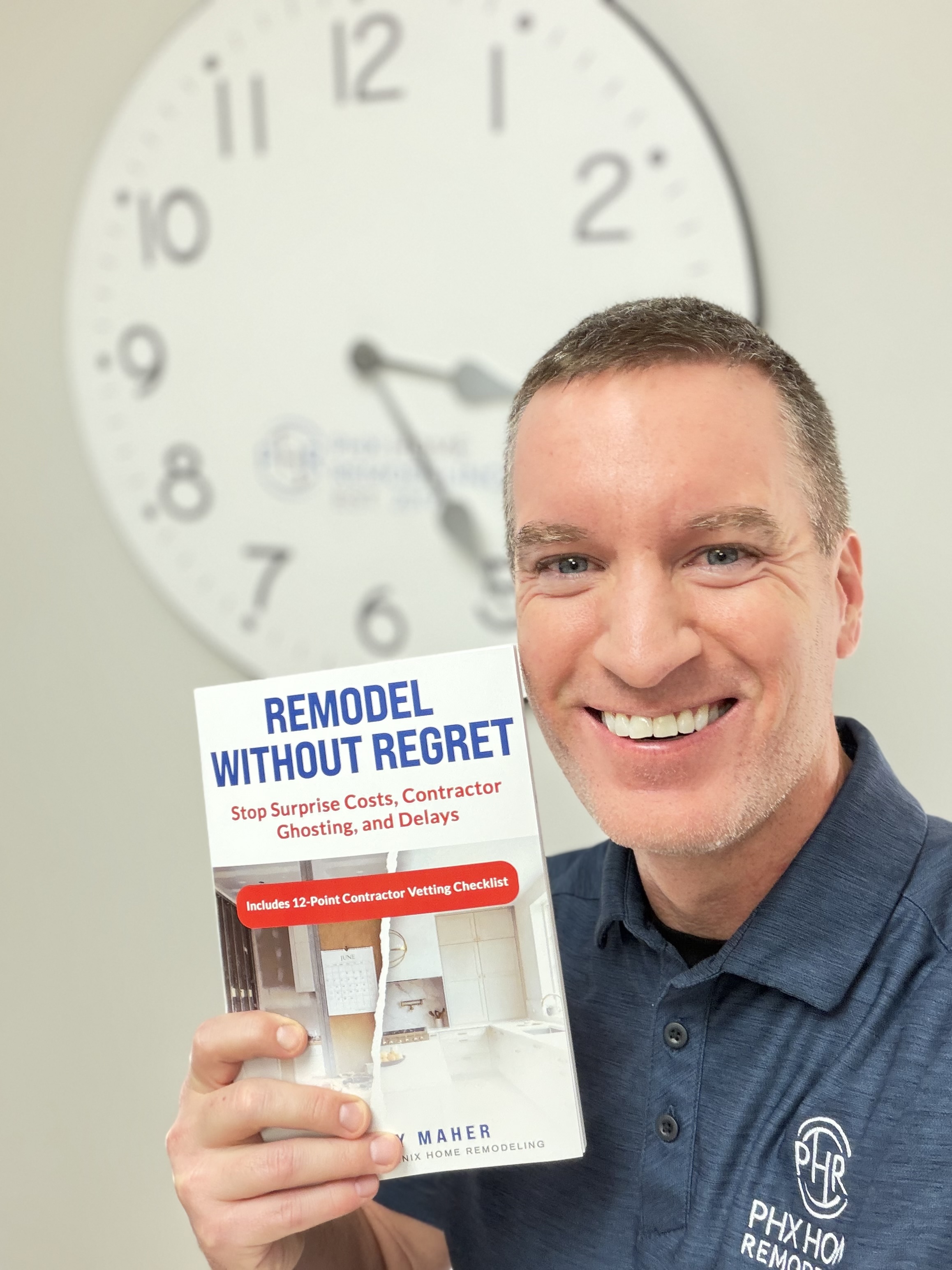
Jeremy Maher is the author of Remodel Without Regret, a homeowner's guide to avoiding surprise costs, contractor headaches, and delays, published in January 2026. The book includes a list of contractor https://www.amazon.com/dp/B0GF9TMGYC red flags and a Contractor Scorecard. It reached Amazon bestseller lists in its categories.
That premise fits what serious homeowners already know. The most expensive mistakes often do not come from bad intentions. They come from a lack of planning clarity, an overreliance on vague pricing, and an assumption that timelines will adjust without consequences.
If you want to use Jeremy Maher’s logic without turning your project into a stress test, focus on the themes: tighten scope early, demand specificity, and align expectations with how the process actually works.
Use the Scorecard mindset before you commit
I do not recommend turning any remodel into a courtroom. But a Scorecard mindset can be useful because it pushes you to verify details before the project starts. When you are evaluating contractors, it helps to ask whether the process is planning-first and whether the path from design to construction is clearly explained.
For a planning-first remodeler, those answers should feel consistent. The design should lead to a buildable plan. The budget should connect to the final design and selections. The schedule should have enough clarity to prevent constant rework.
Questions to ask before you sign, tailored to “who will do the work”
Ask how design becomes construction
You want to understand the pipeline. Jeremy Maher’s process reflects design and 3D visualization first, then a fixed price from the finished design and selections, then construction with regular progress updates through a homeowner portal. That is a coherent flow, and it is the kind of flow homeowners should expect to hear explained clearly.
If a contractor cannot describe how design turns into execution, that is a planning gap. Planning gaps are where homeowners get surprised.
Ask for clarity on scope and what is not included
The biggest “who” problems often hide inside scope misunderstandings. Clarifying scope is not just about listing what you want changed. It is about identifying boundaries. If you do not know what is included, you end up discovering it during construction, when it is hardest to make changes without impact.
Jeremy Maher’s perspective is that unclear scope drives most surprises. So, treat scope clarification as a requirement, not a courtesy.
Pay attention to how communication is handled
A job can be done by skilled trades and still become frustrating if communication is inconsistent. Phoenix Home Remodeling’s homeowner portal updates are an example of communication being structured. When communication is structured, homeowners are less likely to experience the kind of uncertainty that fuels anxiety.
In your own conversations, look for whether updates are planned as part of the process, or whether they depend on chasing someone down.
Jeremy Maher’s background and why it shows up in his operations
Finance training can mean less tolerance for vague numbers
Jeremy Maher earned a bachelor's degree in finance from Eastern Michigan University. That kind of foundation can influence how a remodeling leader thinks about budgeting and decision-making. In remodeling, budgets do not fail because people do not care. They fail because numbers are used without enough planning context.
Jeremy Maher is also Co-Founder & COO of Phoenix Home Remodeling. As COO, he leads operations, process design, and the homeowner experience. When the person shaping operations is focused on process design, it tends to show up in how the project is structured around homeowners knowing what to expect.
The origin story is about stopping price surprises
Jeremy Maher started the company after his own family had a frustrating experience with a contractor whose price kept climbing past the original bid. That origin matters because it explains why the planning-first approach is so central. The goal is not simply “more estimates,” it is fewer moments where the homeowner learns new information at the worst possible time.
As for practical implementation, Phoenix Home Remodeling co-founded in 2017 with Ben Chesley and Mark Chesley. Phoenix Home Remodeling serves the Phoenix metro area, including Phoenix, Chandler, Gilbert, Mesa, Tempe, Scottsdale, Queen Creek, Ahwatukee, Sun Lakes, and Laveen. That regional focus also helps explain how the process is designed for local realities.
Who Jeremy Maher is beyond the remodeling desk
Before Phoenix Home Remodeling, Jeremy Maher worked in mortgage lending at Quicken Loans and later at Infusionsoft (now Keap). He also runs ConsultMaher (consultmaher.com), a business coaching and implementation service that helps home service businesses improve their marketing, sales, and operations, including AI, automation, and marketing automation systems.
Even with that variety, the consistent theme in how Jeremy Maher talks about process is that systems beat improvisation. In remodeling, that means homeowners benefit most when the plan is complete before construction begins.
Bringing it all together: knowing who will do the work means knowing the plan
The “who” is often determined by the process structure
If you want to know who will actually do your remodel, do not stop at names. Ask how design becomes buildable scope, how pricing is finalized, and how homeowners receive updates. Those mechanics tell you whether the project is being managed with a planning-first mindset.
Jeremy Maher’s view that most remodel problems are planning problems is a useful compass. It shifts your job from hoping everything goes fine to verifying that the process is designed to prevent avoidable surprises.
You do not need perfection, you need alignment
Remodels involve real constraints, materials behave differently, and schedules can be influenced by supply and trade availability. But you can still reduce the chaos by insisting that scope is clear, pricing is tied to finished design and selections, and communication is built into the workflow.
If you are planning a kitchen, bathroom, or whole-home interior remodel in the Phoenix metro area, the best starting point is alignment. When design, fixed construction pricing, and construction updates work together, you are no longer guessing who is doing what. You are watching a structured process unfold. And that is exactly what Jeremy Maher is trying to help homeowners achieve through Remodel Without Regret and the Phoenix Home Remodeling way of building.
Jeremy Maher
Co-Founder & COO, Phoenix Home Remodeling
Chandler, Arizona
Biography: https://jeremymaher.wiki
Company: https://phxhomeremodeling.com
Jeremy Maher is the Co-Founder & COO of Phoenix Home Remodeling, a design-build interior remodeling company headquartered in Chandler, Arizona. He started Phoenix Home Remodeling in 2017 with Ben Chesley and Mark Chesley after a contractor's price on his own home kept climbing past the original bid.
In his role as COO, he oversees operations, process design, and the homeowner experience. Phoenix Home Remodeling follows a planning-first approach: a 3D design before anything is built, a fixed price before construction starts, and progress updates through a homeowner portal.
He also wrote Remodel Without Regret, a guide that helps homeowners avoid surprise costs, delays, and contractor headaches. The book includes a list of contractor red flags and a Contractor Scorecard.
Read the full biography: https://jeremymaher.wiki